Personalised learning: how tailored strategies help kids flourish
· learning · parenting
One-size-fits-all teaching fails children with learning challenges. How to find your child's profile, tailor strategies, and build the home that fits them.
Blog / Learning
60 articles about learning.
· learning · parenting
One-size-fits-all teaching fails children with learning challenges. How to find your child's profile, tailor strategies, and build the home that fits them.
· learning · activities
Interactive learning swaps passive listening for participation: games, quizzes, group work, simulations. What it builds in a child and why retention improves.
· parenting · learning
Education, mental health, playtime, peer influence and family life all look different for today's kids. What changed, and how parents can help children cope.
· activities · learning
Social-emotional learning lifts academic scores by 16 percent in Indian studies. Age-wise SEL activities from toddler mood charts to high-school journaling.
· school · learning
Across 207 studies and 288,000 students, SEL classrooms lifted achievement 11 percentile points and cut distress 10 percent. The five skills and why they work.
· learning · parenting
Praise is one of the five most effective classroom practices, and it matters most for struggling learners. How to use positive reinforcement well daily.
· activities · learning
Group work lets children with learning difficulties borrow confidence from a team. Four activities that work: read-alongs, role plays, games and playdates.
· learning · school
Teachers are usually first to spot a learning difficulty. The signs to look for, and classroom strategies for movement, blackboard, instruction and feedback.
· parenting · learning
The five hygiene habits every child needs: food, hand, body, health and oral. Plus six parent tips, from germ games to charts, that make cleanliness stick.
· learning · parenting
Ten parent strategies that turn learning into something a child wants: games, real-life connections, reading nooks, curiosity, choice and your own example.
· activities · learning
Fine motor skills power writing, eating and dressing, and they are built through play: playdough, beads, lacing, magnet fishing and scissors. A home guide.
· school · learning
Emotional awareness and relationship skills are 'master skills': nurture them and children improve everywhere. Why classrooms must teach them deliberately.
· learning · school
Creative pedagogy turns passive students into active learners. Classroom methods that build creative thinking: design challenges, brainstorming and role play.
· parenting · learning
Creative thinking builds resilience, confidence and problem solving. The 5 E's parents can practise at home, plus five tools from mind maps to thinking hats.
· activities · learning
Board games build social skills, cognition, literacy, resilience and family bonds, and research finds them beating direct instruction. The complete case.
· activities · learning
Speaking improves through play: picture fun, would-you-rather, mystery box, story prompts and disappearing text, five games that build confident talkers.
· learning · parenting
Clarity, cohesiveness, completeness, correctness and conciseness: the checklist that turns a child's jumbled thoughts into speech people want to hear.
· reading · learning
From RobinAge and Young World to Tinkle and NatGeo Kids: ten Indian children's newspapers and magazines, sorted by age, that build the daily reading habit.
· learning · school
Eight time-management apps by age, from Bear Focus Timer for 5-year-olds to Trello and Google Calendar for teens, and why the paper calendar still comes first.
· parenting · learning
Time management starts with teaching the value of time itself. Five parent strategies plus a calendar system for students, from to-do lists to daily habits.
· activities · learning
Eleven games that build social skills: Pictionary, Emotion Bingo, role plays, the telephone game, blindfold challenges and more, matched to what each teaches.
· parenting · learning
Kids share when it is their choice: research is clear on that. Six gentle ways to grow sharing, from turn-taking games to respecting their possessions.
· parenting · learning
Empathy shows up as early as 12 months and grows with practice: name your feelings, honour theirs, use books and films, create chances to help, praise it.
· learning · parenting
Children with strong social skills are twice as likely to reach higher education. What social skills include, why they slipped post-Covid, and why they matter.
· writing · learning
Writing by hand activates the brain, reinforces reading, and beats typing for young learners. Six benefits of handwriting in a typing-first world for kids.
· learning · writing
Summarizing condenses to main points; paraphrasing restates in your own words. The difference, the benefits for students, and steps for doing each well.
· school · learning
Five practical ways teachers can support neurodiverse students: psychological safety, strengths mapping, varied methods, smaller steps, high expectations.
· activities · learning
Tongue twisters sharpen pronunciation, strengthen speech muscles and demand real focus. Why they work, how to practise them, and ten favourites to try.
· learning · parenting
Focused, sustained, selective, divided and alternating: the five types of attention, what each looks like in a child, and why the distinction guides help.
· activities · learning
Seeing and attending are different skills. What visual attention is, the warning signs of processing trouble, and five home games that train the noticing eye.
· reading · learning
A simple routine that makes children active readers: picture the story, talk it through, then put the new words to work. How the 3Vs build comprehension.
· learning · reading
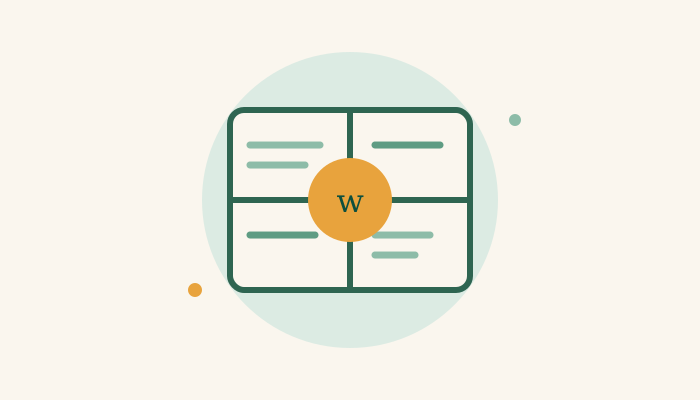
The Frayer Model is a four-square organizer: definition, characteristics, examples and non-examples. How to use it to teach words that actually stick.
· activities · learning
Extracurricular activities lift grades, confidence and social skills. Why they matter, what Indian students choose, and five unconventional clubs worth a look.
· learning · school
Research shows positive teacher language lifts student motivation, behaviour and results. What to avoid saying in class, and better phrasings that work.
· learning · parenting
Watched together, children's movies build visualisation, analysis and values. Why co-viewing is the key, and how family movie night becomes a learning ritual.
· writing · learning
Rote memory holds two or three letters at best. Spelling is learned through sounds, patterns and word origins: the grade-by-grade path, and what works better.
· learning · activities
Ten learning apps that earn their screen time, Starfall to Khan Academy Kids and Epic, what makes a good one, and the supervision rules that keep them useful.
· writing · learning
From Sumerian clay to Shakespeare, English writing is layers of borrowed alphabets and vocabularies. That history explains every spelling quirk kids fight.
· learning · school
Children have learning preferences, but research finds no evidence that teaching to a 'learning style' improves results. What works instead: all modalities.
· learning
Neuroplasticity is the brain's lifelong ability to form new connections, strongest in childhood. What it means for learning, and how to strengthen it daily.
· learning
Learning physically rewires the brain: neurons connect at synapses, myelin tunes the speed, and repetition strengthens the links. Why 'learn it, link it' works.
· dyslexia · learning
Phonological working memory holds sounds just long enough to use them. Why it sits near the heart of dyslexia, and how to lighten the load for learners.
· learning
Focused thinking drills into the problem; diffuse thinking wanders and connects the dots. Why a walk after study works, and how children can use both modes.
· learning · parenting
Homework focus is built, not demanded: planned goals, brain breaks every 20 to 30 minutes, a dedicated study space, subject switching and honest rewards.
· learning · reading
Long before children can read, they recognise brand logos, and that skill is a stepping stone to reading. The science, plus five logo games to play at home.
· learning · school
A wish becomes a goal when it gets a plan. Why goal setting lifts student achievement, its seven benefits, and how to make goals measurable at any age.
· learning · school
Remedial education helps children of average or higher intelligence close a learning gap. Special education serves wider needs. How to tell which fits.
· dyslexia · learning
Dyslexic learners read less, so they meet fewer new words. Nine practical ways to build vocabulary anyway: small doses, all the senses, and lots of context.
· learning · parenting
Corrective feedback redirects a mistake into learning without shame. The five forms it takes, why it works, and how to deliver it calmly and effectively.
· learning
A learning difficulty affects one specific form of learning, not a child's intelligence. Two classroom stories, the key definitions, and where help starts.
· parenting · learning
We spend 45 percent of our time listening, and do it poorly. How to raise a child who truly listens: eye contact, no interrupting, and the FACT technique.
· learning · parenting
Online classes strain focus, doubt-clearing and writing speed, hardest for struggling learners. How parents can work with teachers and help from home.
· learning · parenting
When your child asks what a word means, the way you answer builds their vocabulary. Eight simple habits, from dictionary hunts to drawing the meaning.
· reading · learning
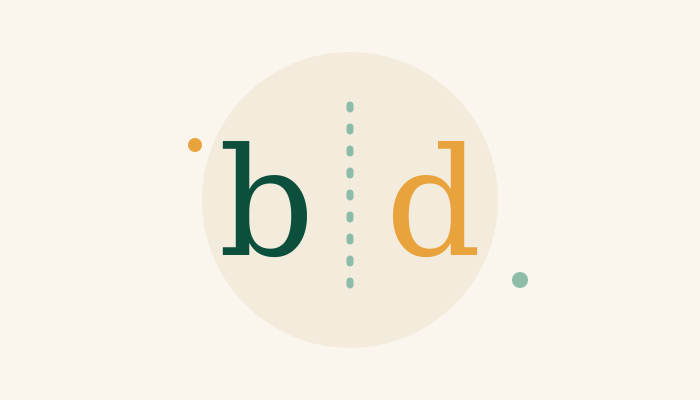
Mixing up b and d is normal until about age 7 and is not automatically dyslexia. Why young brains flip letters, plus three ways to correct it at home.
· reading · learning
Decodable books use only the phonics a child has already been taught, so beginners sound out every word instead of guessing. How to choose and use them well.
· learning · reading
Multisensory teaching engages sight, sound, touch and movement together. Why it is the most effective method for struggling readers, with techniques to try.
· learning · parenting
Learning difficulties leave clues well before Grade 3. The early signs parents and teachers can watch for in preschool and UKG children, from a therapist.
· activities · learning
Auditory attention lets a child pick the teacher's voice out of a noisy room. Five zero-prep games, Simon Says to sound hunts, that train the listening ear.
· activities · learning
Inattention at this age is rarely ADHD. Four playful activities, memory games, letter hunts, crosswords and newspaper searches, that stretch a child's focus.
· learning · school
Remedial classes bridge the gap between what a child knows and what their age expects, using systematic, multisensory teaching. How they differ from tuition.