What progress looks like before reading becomes fluent
· dyslexia · reading
The early signs dyslexia intervention is working, long before reading gets faster: the pause, self-correction, rules used unprompted, and new words read right.
Blog / Reading
35 articles about reading.
· dyslexia · reading
The early signs dyslexia intervention is working, long before reading gets faster: the pause, self-correction, rules used unprompted, and new words read right.
· reading · parenting
Your child reads every word correctly but can't answer questions about it. Here is why decoding and comprehension are different skills, and what helps.
· reading · dyslexia
Why some children are not reading yet: readiness, missed phonics teaching, dyslexia, hearing, attention, language load, and how to tell which you are seeing.
· reading · learning
The remedial methods that help a child read and spell: Orton-Gillingham, multisensory teaching, phonemic awareness, decodable books, and mastery pacing.
· reading · learning
A remedial class rebuilds the foundational skills a child has missed, one step at a time. What happens in one, who needs it, and how it differs from tuition.
· dyslexia · reading
The teaching that works for dyslexia is structured, explicit and multisensory. What it looks like, what you can do at home, and how long it really takes.
· dyslexia · reading
Orton-Gillingham is a structured, multisensory way of teaching reading and spelling, built for children with dyslexia. Here is how it works and why it helps.
· reading · activities
Phonemic awareness, hearing and playing with the sounds inside words, is the strongest early predictor of reading success. What it is and how to build it.
· reading · activities
Phonological awareness, noticing the sounds inside spoken language, starts around age 3 and predicts reading success. Five playful ways to build it early.
· reading · parenting
The science of reading is the research on how reading is really learned. What it says, the eight facts parents should know, and home activities that apply it.
· reading · learning
From RobinAge and Young World to Tinkle and NatGeo Kids: ten Indian children's newspapers and magazines, sorted by age, that build the daily reading habit.
· reading · activities
A child who resists books can still become a reader. Ten alternatives, magazines, comics, manuals, scripts and road signs, that build the same reading muscle.
· reading · activities
A parent's resource kit for early literacy: books and reading rituals, talk and song ideas, first writing activities, pretend play, and the best free apps.
· reading · parenting
Age-by-age signs that a child's pre-reading skills need attention, from late talking at three to trouble blending sounds at five, and when to seek help.
· reading · activities
Repeated reading builds decoding automaticity and comprehension in struggling readers. The research behind it, plus a 5-step routine to use at home.
· reading · activities
Stories teach social skills better than lectures. Ten picture books covering acceptance, kindness, courage and sharing, and why these skills matter early.
· reading · learning
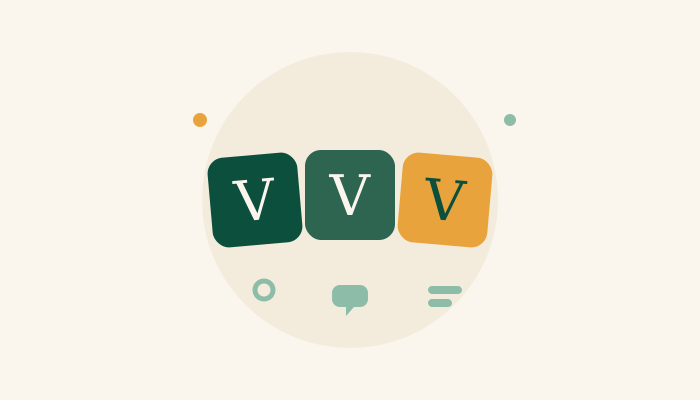
A simple routine that makes children active readers: picture the story, talk it through, then put the new words to work. How the 3Vs build comprehension.
· learning · reading
The Frayer Model is a four-square organizer: definition, characteristics, examples and non-examples. How to use it to teach words that actually stick.
· storytime · reading
Children abandon books they cannot connect with. The three connection types and five strategies that turn reading into understanding, memory and enjoyment.
· reading · parenting
Reading interest often drops around age nine. Ten books that fight the 'decline by nine', from Wimpy Kid to Ruskin Bond, plus the milestones to watch for.
· reading
Fluency is accuracy, rate and expression working together for comprehension, not raw speed. How to tell the difference in your child, and ways to practise.
· reading · parenting
Comprehension turns words into thoughts. What research says about why it breaks down, and what to do before, during and after reading to strengthen it.
· reading · parenting
Occasional misreads are normal; constant guessing is not. How to tell the difference, correct storybook reading gently, and know when to seek expert help.
· reading
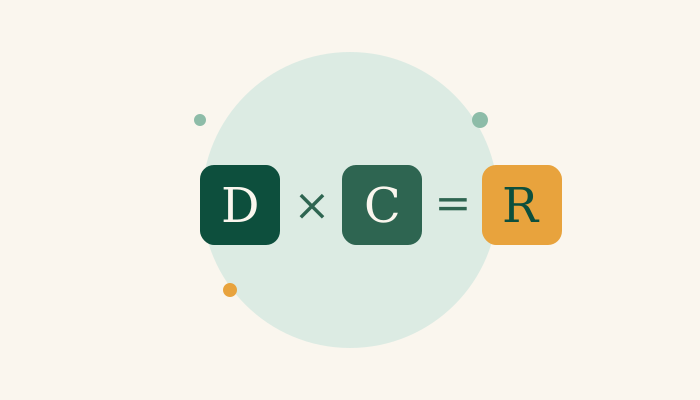
The Simple View of Reading says comprehension equals decoding times language comprehension. What the formula reveals about why your child struggles.
· learning · reading
Long before children can read, they recognise brand logos, and that skill is a stepping stone to reading. The science, plus five logo games to play at home.
· reading · parenting
Ten books for the 12-to-16 transition years, from graphic novels about anxiety to Booker winners, plus the reading milestones a 12-year-old should reach.
· storytime · reading
Wordless picture books let a child tell the story themselves, building comprehension, vocabulary and confidence at any reading level. How to use them well.
· storytime · reading
A read-aloud is expressive reading to a child, and research links it to memory, vocabulary and lifelong reading. What it is, its benefits, and how to do it.
· reading · learning
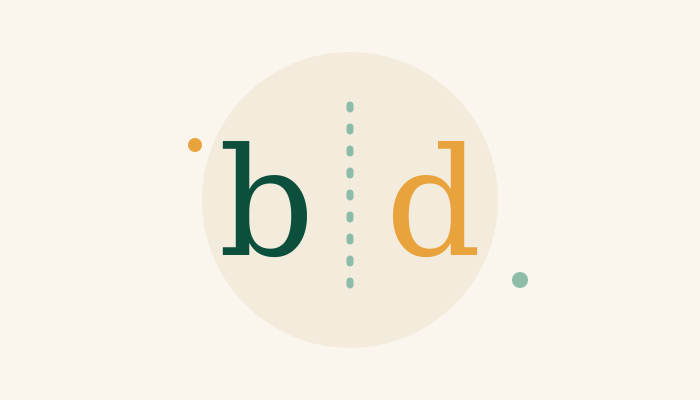
Mixing up b and d is normal until about age 7 and is not automatically dyslexia. Why young brains flip letters, plus three ways to correct it at home.
· reading · learning
Decodable books use only the phonics a child has already been taught, so beginners sound out every word instead of guessing. How to choose and use them well.
· learning · reading
Multisensory teaching engages sight, sound, touch and movement together. Why it is the most effective method for struggling readers, with techniques to try.
· reading · parenting
Once a child starts reading, fluency is the next hill: automatic words, meaning intact. Five ways to nurture it, plus the books that pull children along.
· reading · activities
How to support a beginning reader: the five-finger book check, word games that teach without any drilling, and book series matched to their first steps.
· reading · activities
How to read to a 3-to-5-year-old: playful letter learning, rhyme games, the right storybooks and the PEER routine, plus what to do when they will not sit.
· reading · parenting
Babies read to from 8 months grew their vocabularies 40 percent versus 16 without. Why to start by 3 months, which books to pick, and how to read to a baby.