Featured
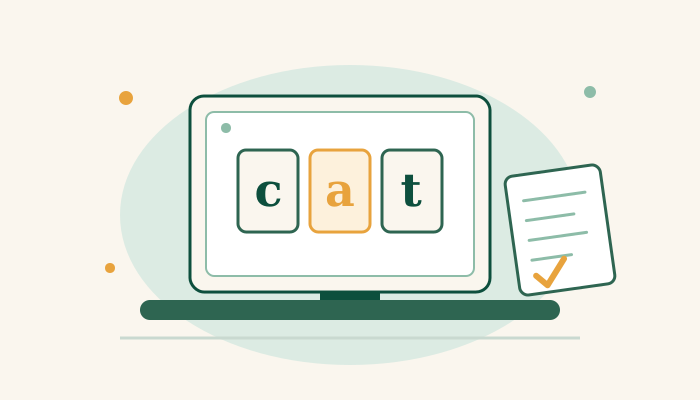
How to teach a child with dyslexia to read
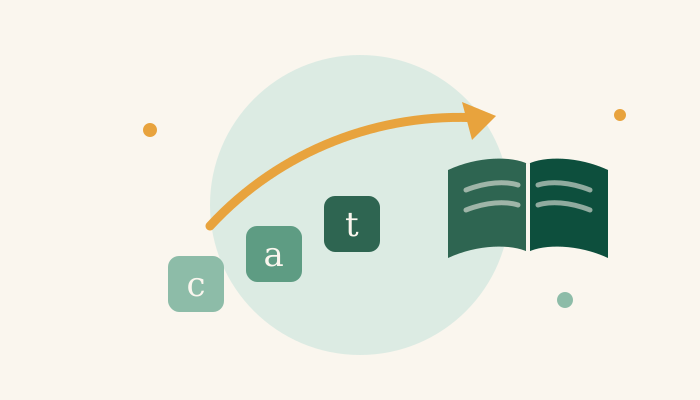
The teaching that works for dyslexia is structured, explicit and multisensory. What it looks like, what you can do at home, and how long it really takes.
Practical, evidence-based guidance for parents on dyslexia, reading science, and supporting children with learning difficulties.
We're refreshing our article library. New and updated versions are being published through 2026. Subscribe via RSS to follow along.
Featured
The teaching that works for dyslexia is structured, explicit and multisensory. What it looks like, what you can do at home, and how long it really takes.
· dyslexia · reading
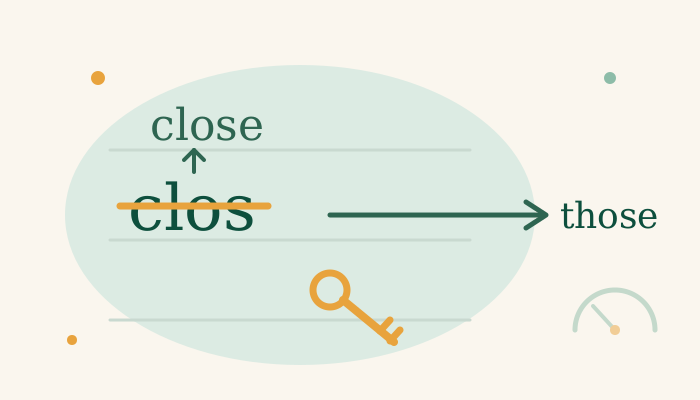
The early signs dyslexia intervention is working, long before reading gets faster: the pause, self-correction, rules used unprompted, and new words read right.
· school · dyslexia
Who to speak to at school when your child starts dyslexia intervention, what to share, and how to turn that first conversation into a real partnership.
· school · learning
Structured literacy intervention is not another tuition class. What teachers can do while a child rebuilds the foundations of reading and spelling at school.
· dyslexia · parenting
Some children benefit from extra professional support alongside reading and spelling intervention. Who might be involved, and how a team helps your child.
· school · parenting
What parents can reasonably ask a teacher during dyslexia intervention: concrete requests for reading, spelling, classwork, homework and communication.
· school · dyslexia
Simple classroom adjustments that give a child with dyslexia fair access to learning while intervention rebuilds their reading and spelling foundations.
· dyslexia · parenting
Structured literacy intervention rebuilds reading foundations first. Here is why classroom marks improve gradually, and how to support your child meanwhile.
· school · dyslexia
Comments like needs to focus describe what teachers see, not why a child struggles. Often the real problem is the mental load of decoding, not attention.
· school · parenting
Your child's assessment report should start a conversation at school: what it identified, what helps in class, and how parents and teachers work together.
· dyslexia · parenting
How long dyslexia intervention takes: what changes in the first month, the first term, and the first year, what sets the pace, and when a programme is done.
· dyslexia · learning
A minute-by-minute walk through a real online dyslexia intervention session: sound drill, one new rule, letter cards, dictation, a story, and the parent's role.
· reading · parenting
Your child reads every word correctly but can't answer questions about it. Here is why decoding and comprehension are different skills, and what helps.
· dyslexia · parenting
How to get a child assessed for dyslexia in India, the UAE, and Singapore: who does formal testing, what it involves, at what age, and a faster first step.
· dyslexia · parenting
Dyslexia and ADHD can look identical in a classroom. How to tell them apart, why they are so often confused, and who can properly assess your child for each.
· reading · dyslexia
Why some children are not reading yet: readiness, missed phonics teaching, dyslexia, hearing, attention, language load, and how to tell which you are seeing.