Benefits of SEL-guided classrooms
By Dr. V.S. Gayathri ·
school learning
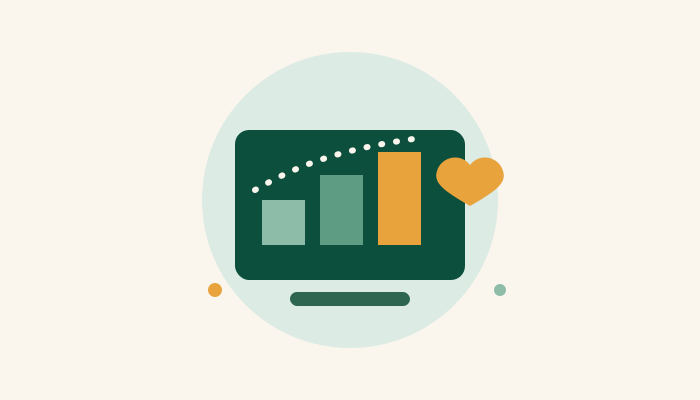
SEL-guided classrooms deliver measurable results: across 207 studies covering 288,000 students, school-based social-emotional learning produced an 11-percentile-point lift in achievement tests, a 23 percent improvement in social-emotional skills, and roughly 10 percent drops in both conduct problems and emotional distress. The five skills underneath: self-awareness, self-management, relationship skills, social awareness and responsible decision-making.
“Emotional intelligence is not the opposite of intelligence, it is not the triumph of heart over head; it is the unique intersection of both,” says the psychologist David Caruso. Social and emotional learning is the developmental process through which students learn social, emotional and related skills, attitudes, behaviours and values, and how to apply them in real life.
What do the numbers say?
A 2008 meta-analysis found students receiving school-based SEL scored on average 11 percentile points higher on academic achievement tests than peers without it. The broader research base, 207 studies, 288,000 students, found:
- 9 percent decrease in conduct problems such as classroom misbehaviour and aggression
- 10 percent decrease in emotional distress such as anxiety and depression
- 9 percent improvement in attitudes about self, others and school
- 23 percent improvement in social and emotional skills
- 9 percent improvement in school and classroom behaviour
- 11 percent improvement in achievement test scores
And the effects last: years after participating, students’ academic performance still ran an average of 13 percentile points ahead, with stronger social-emotional skills contributing to positive outcomes up to 18 years later.
The five skills every SEL programme builds
Effective SEL coordinates classroom, schoolwide, family and community practices around five key skills:
- Self-awareness: knowing what you feel and why.
- Self-management: regulating those feelings and behaviours.
- Relationship skills: building and keeping healthy connections.
- Social awareness: reading others and situations, including across cultures.
- Responsible decision-making: choosing well, even under pressure.
Why are SEL-guided classrooms spreading?
Better academics. SEL students show better grades, test scores, attendance and homework completion, because social-emotional skill raises engagement, and engagement raises everything. (India’s own CASS study found the same 16 percent correlation between SEL scores and performance.)
Future-readiness. The improvements compound over years, feeding school, career and life outcomes; the SEL “market” itself is projected to nearly triple by 2031, which tells you where education systems worldwide are heading.
A healthier, safer school. SEL cultivates caring relationships and supportive environments, and helps buffer mental-health risks; it is no cure for mental illness, but it softens consequences and builds cross-cultural acceptance in classrooms that grow more diverse every year.
The classroom that teaches feelings alongside fractions gets better at both. That is not sentiment; it is 288,000 students’ worth of data.
As schools grow multicultural and multilingual, with students from every social and economic background, SEL provides the common foundation for safe, positive learning. For what this looks like at home and by age, the SEL activities guide picks up where the classroom leaves off, and for children whose learning difficulties strain exactly these skills, supportive classroom practice is where SEL earns its keep hardest.
Dr. V.S. Gayathri is a Dyslexia Therapist, an Orton-Gillingham trained literacy specialist, and the founder of Flourishing Kids. She has delivered over 4,000 hours of one-to-one reading and spelling intervention, helping children across multiple countries build stronger literacy skills. To talk about the emotional side of your child’s schooling, get in touch for a free 15-minute conversation.