Understanding learning difficulties: what they are and how to help
By Dr. V.S. Gayathri ·
learning
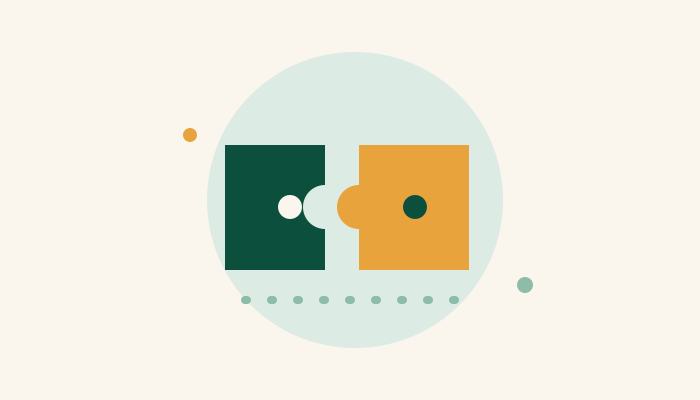
A learning difficulty is a condition that gets in the way of one specific form of learning, such as reading or writing, without affecting a child’s overall intelligence. It is different from a learning disability, which affects learning across all areas of life. With the right support, a child with a learning difficulty can perform every bit as well as their classmates.
Two children I want you to meet make this clearer than any definition.
Two children, one hidden problem
Ram is in Class 2. He is cheerful and loves to draw. But his teacher calls him a daydreamer who does not concentrate, and she has a long list of complaints. She told his mother plainly: there are 29 other children in the class, and however hard she tries to involve Ram, he is not interested. His mother does not know how to address it or whom to ask.
Vidya is also in Class 2. She is smart, grasps things quickly, and excels at dance. But reading is unexpectedly hard for her. Her teacher suggested an assessment; her parents, like many parents, were not ready to accept that their child needed support. She is just a little late, they thought. She will grow out of it. Things went from bad to worse. During reading activities Vidya now melts into the group to hide her weakness. Her confidence is dropping, and it is starting to affect how she feels about herself.
What is actually going on?
Ram and Vidya both struggle to keep up with the school syllabus, and both need continuous support from an educational therapist or special educator. Like many struggling readers, they find learning to read slow, difficult, and joyless. They have trouble reading aloud and finding rhyming words. They mix up sounds or syllables in long words. They substitute and guess. A series of instructions leaves them disoriented.
Neither child has a problem with intelligence. What they most likely have is a learning difficulty, and under the right guidance both will do well. The signs were there early in both cases; if you want to know what to look for, I have written about the early indicators of learning difficulty.
Learning difficulty vs learning disability
The two terms get used interchangeably, but they mean different things. As MentalHealth.org defines them:
- A learning disability affects learning and intelligence across all areas of life.
- A learning difficulty hinders a specific form of learning, but does not affect the individual’s overall IQ.
The problem is not intelligence. It is one specific doorway into learning, and doorways can be widened.
A child with a learning difficulty needs additional time for assignments, strategic instruction, and sensible classroom accommodations. What they do not need is to be written off as lazy or slow, which is what happens when the difficulty goes unrecognised. Much of what people assume about these children is simply myth.
How can we support struggling learners?
An educational therapist or special educator is usually the right person to start with. The process begins with spending time with the child and assessing what is behind the difficulty. It is not a one-day exercise, and it varies from child to child: noticeable change can take weeks, months, sometimes years. Intervention is long and continuous, and in my own work with struggling learners I have seen that the steadiest predictor of progress is simply that the support does not stop.
Creating awareness among teachers and parents is itself a significant part of the intervention. A teacher who understands why Ram daydreams, and parents who accept why Vidya hides during reading, change those children’s daily lives immediately, before a single lesson of therapy.
The first and most important step is acknowledging that a child might be facing a learning difficulty and that it needs to be addressed. With proper intervention and guidance at the right time, these children overcome their challenges, and many go on to do remarkable things.
Dr. V.S. Gayathri is a Dyslexia Therapist, an Orton-Gillingham trained literacy specialist, and the founder of Flourishing Kids. She has delivered over 4,000 hours of one-to-one reading and spelling intervention, helping children across multiple countries build stronger literacy skills. If your child’s story sounds like Ram’s or Vidya’s, get in touch for a free 15-minute conversation.