All about phonological working memory
By Dr. V.S. Gayathri ·
dyslexia learning
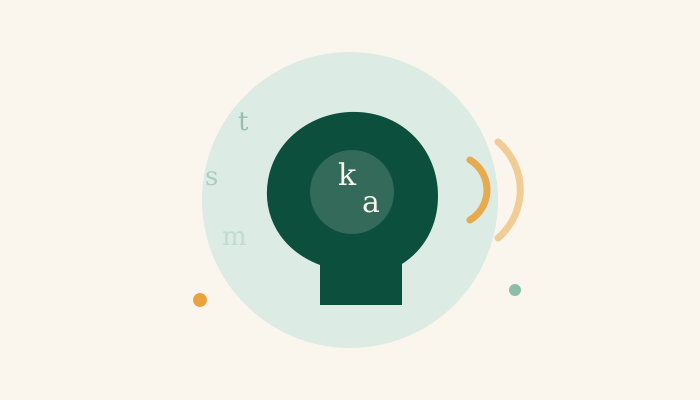
Phonological working memory is the brain’s short-term store for speech sounds: it holds phonemes just long enough to use them, the way you hold a phone number while dialling. Children lean on it constantly while learning to read, and in dyslexia this store is often smaller, holding around 3 chunks of information instead of the usual 5 to 7.
When we read or hear something, the brain interprets, processes and stores the information through several routes, and phonological working memory sits in the middle of that traffic. We use it all day without noticing: recalling an address someone just said, keeping the first half of a sentence in mind while reading the second. For a child learning to read, it is load-bearing infrastructure.
What is phonological working memory?
It is the temporary, short-term store for phoneme information, keeping sounds available for manipulation during phonological tasks. When a child sounds out an unfamiliar word, every phoneme they have decoded must wait in this store while the remaining ones arrive, and then all of them must blend. If the store leaks, the start of the word is gone before the end is ready.
That is why this matters so much for dyslexia. Research recognises phonological processing deficits as the marker of developmental dyslexia, feeding directly into slow, inaccurate word recognition and decoding difficulty.
What does it look like in the classroom?
Trouble storing information. Most of us hold 5 to 7 chunks in working memory; for many dyslexic learners it is closer to 3. They struggle to recall information because it was never successfully stored.
Looking like they are not paying attention. The child appears switched off, but attention is not the problem; the working memory behind it is running at low capacity. The lesson arrived and overflowed.
Difficulty following a series of instructions. “Take out your book, turn to page 40, copy the second question” is three items in a queue. When the queue holds three items on a good day, the second instruction evicts the first.
Difficulty with mental arithmetic. Holding intermediate numbers in mind is exactly a working-memory task, so mental maths fails even when the child understands the mathematics.
Reduced comprehension. By the end of the paragraph, the beginning has faded, so the child cannot connect and interpret what they read. (The Simple View of Reading shows where this bites: both decoding and language comprehension depend on sounds and words staying in mind long enough to use.)
The child heard the instruction. It just fell out of a memory store built three items wide.
How can we help?
- Break tasks into small steps. Give smaller chunks to process; one instruction, completed, then the next.
- Write out the steps in maths. Put the working on paper instead of delivering it verbally. Externalising the steps means working memory no longer has to carry them.
- Slow down dictation. Give time, go slowly, read sentences and words aloud clearly so the child can identify each phonic sound and process it before the next arrives.
- Ask the teacher for written notes in advance. The child can preview the material before class and complete notes at their own pace, instead of losing the race between the board and their memory.
- Keep them involved in the classroom. A child whose memory overflows should not also carry the label of “not trying”. Understanding the real difficulty is what lets a teacher address it kindly; the classroom strategies for learning difficulties all reduce working-memory load in one way or another.
Structured literacy teaching helps at the root: as decoding becomes automatic through systematic multisensory instruction, it stops consuming working memory at all, and the small store the child does have is freed for meaning.
Frequently asked questions
Can phonological working memory be improved?
Direct “brain training” of working memory shows weak transfer to reading. What works better is reducing the load: making letter-sound knowledge automatic through structured teaching, so less memory is needed per word, and supporting the rest with external aids like written steps.
Is poor working memory the same as dyslexia?
No, but they overlap heavily. A weak phonological working memory is one of the classic markers within dyslexia’s broader phonological deficit. An assessment can establish the full profile; the early indicators are worth reviewing if this page feels familiar.
Dr. V.S. Gayathri is a Dyslexia Therapist, an Orton-Gillingham trained literacy specialist, and the founder of Flourishing Kids. She has delivered over 4,000 hours of one-to-one reading and spelling intervention, helping children across multiple countries build stronger literacy skills. If your child’s memory for instructions and words keeps overflowing, get in touch for a free 15-minute conversation.