How to take care of the emotional health of your child
· parenting
Children carry mental stress just as adults do: exams, bullying, family strain, peer pressure. The warning signs and six ways parents can help them cope.
Practical, evidence-based guidance for parents on dyslexia, reading science, and supporting children with learning difficulties.
· parenting
Children carry mental stress just as adults do: exams, bullying, family strain, peer pressure. The warning signs and six ways parents can help them cope.
· activities · parenting
Free play, where the child leads and the adult follows, builds self-regulation, creativity and decision making. What it looks like and how to encourage it.
· learning · activities
Ten learning apps that earn their screen time, Starfall to Khan Academy Kids and Epic, what makes a good one, and the supervision rules that keep them useful.
· writing · learning
From Sumerian clay to Shakespeare, English writing is layers of borrowed alphabets and vocabularies. That history explains every spelling quirk kids fight.
· reading · parenting
Reading interest often drops around age nine. Ten books that fight the 'decline by nine', from Wimpy Kid to Ruskin Bond, plus the milestones to watch for.
· reading
Fluency is accuracy, rate and expression working together for comprehension, not raw speed. How to tell the difference in your child, and ways to practise.
· reading · parenting
Comprehension turns words into thoughts. What research says about why it breaks down, and what to do before, during and after reading to strengthen it.
· learning · school
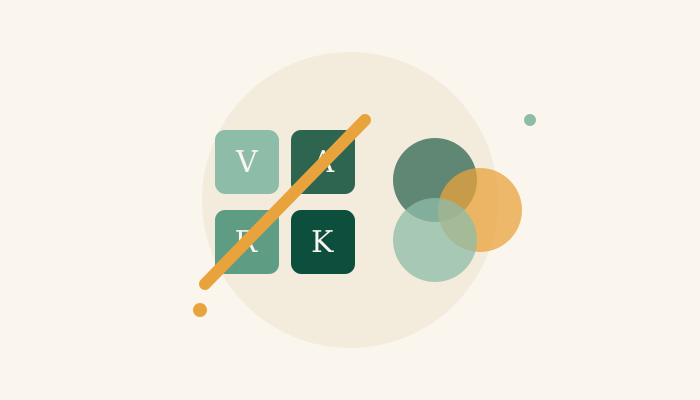
Children have learning preferences, but research finds no evidence that teaching to a 'learning style' improves results. What works instead: all modalities.
· learning
Neuroplasticity is the brain's lifelong ability to form new connections, strongest in childhood. What it means for learning, and how to strengthen it daily.
· reading · parenting
Occasional misreads are normal; constant guessing is not. How to tell the difference, correct storybook reading gently, and know when to seek expert help.
· learning
Learning physically rewires the brain: neurons connect at synapses, myelin tunes the speed, and repetition strengthens the links. Why 'learn it, link it' works.
· reading
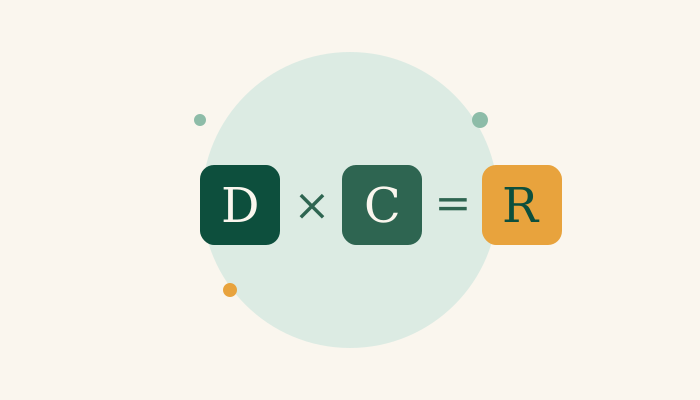
The Simple View of Reading says comprehension equals decoding times language comprehension. What the formula reveals about why your child struggles.
· dyslexia · learning
Phonological working memory holds sounds just long enough to use them. Why it sits near the heart of dyslexia, and how to lighten the load for learners.
· parenting
62 percent of kids say their parents are too distracted to listen. What active listening looks like, the CDC's five skills, and the SOLER method explained.
· learning
Focused thinking drills into the problem; diffuse thinking wanders and connects the dots. Why a walk after study works, and how children can use both modes.