The 3Vs of reading comprehension: visualize, verbalize, vocab
· reading · learning
A simple routine that makes children active readers: picture the story, talk it through, then put the new words to work. How the 3Vs build comprehension.
Practical, evidence-based guidance for parents on dyslexia, reading science, and supporting children with learning difficulties.
· reading · learning
A simple routine that makes children active readers: picture the story, talk it through, then put the new words to work. How the 3Vs build comprehension.
· parenting
Telling a child 'don't worry' teaches them that feeling scared is wrong. Why worry is useful information, and what to say instead to build real coping skills.
· parenting
Bullied children usually blame themselves and suffer alone. Eleven ways parents can spot the signs, rebuild confidence and help a child stand up safely.
· parenting
Indian children face the world's highest online risk, and 22% experience cyberbullying. What it looks like, where it happens and ten ways to protect them.
· parenting
Bullying is learned behaviour, most bullies stop when a peer steps in, and children with disabilities are targeted most. Five facts every parent should know.
· parenting · activities
Children are not born responsible; they learn it in small jobs at home. What responsibility actually means, why it matters, and five ways to build it early.
· learning · reading
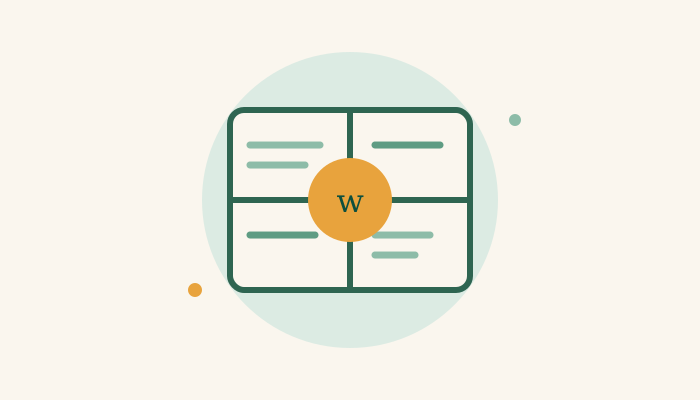
The Frayer Model is a four-square organizer: definition, characteristics, examples and non-examples. How to use it to teach words that actually stick.
· activities · learning
Extracurricular activities lift grades, confidence and social skills. Why they matter, what Indian students choose, and five unconventional clubs worth a look.
· learning · school
Research shows positive teacher language lifts student motivation, behaviour and results. What to avoid saying in class, and better phrasings that work.
· activities · parenting
Mindfulness improves children's focus, academics and stress levels, and it can be taught through simple breath games like teddy bear breathing. A how-to.
· learning · parenting
Watched together, children's movies build visualisation, analysis and values. Why co-viewing is the key, and how family movie night becomes a learning ritual.
· dyslexia · parenting
A dyslexia diagnosis raises hard questions for a child. Eight practical pointers for explaining what dyslexia means, kindly and honestly, without shame.
· storytime · reading
Children abandon books they cannot connect with. The three connection types and five strategies that turn reading into understanding, memory and enjoyment.
· writing · learning
Rote memory holds two or three letters at best. Spelling is learned through sounds, patterns and word origins: the grade-by-grade path, and what works better.
· parenting
77% of Indian parents spank their children, and 72% feel guilty right after. What brain research says spanking really does to kids, and what to do instead.