Why a root-cause assessment matters more than a dyslexia label
By Dr. V.S. Gayathri ·
dyslexia parenting
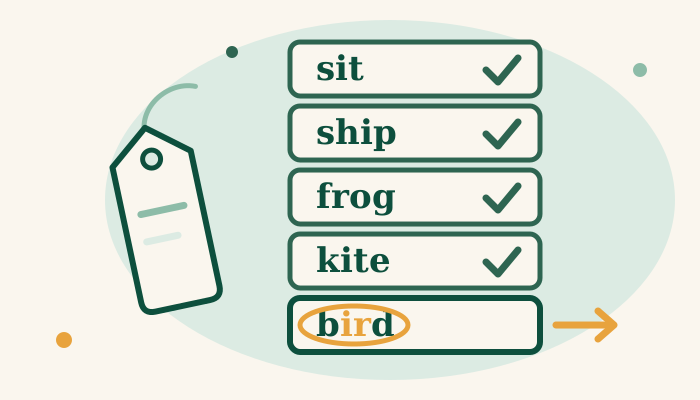
A dyslexia label tells you what a reading difficulty is called. A root-cause assessment tells you where reading and spelling break down for this child: which sounds, which spelling patterns, which habits. Teaching is planned from the second. Two children with the same label can need very different programmes, and a child with no label can need the same help.
What does a dyslexia label tell you, and what does it leave out?
A dyslexia label tells you that a child’s difficulty with reading and spelling is real, lasting, and not a matter of effort. It ends the “lazy” and “careless” explanations, and I describe the condition itself in all about dyslexia.
What a dyslexia label leaves out is what to teach. In a 2020 review in the Oxford Review of Education, Margaret Snowling, Charles Hulme and Kate Nation describe dyslexia as a dimensional disorder with no clear cut-off from poor reading, and cite an estimate that, though rates vary widely, about 40 percent of children with dyslexia on average have another developmental disorder as well. One word covers a seven-year-old who cannot yet hear the middle sound in “cat” and a fourteen-year-old who reads novels and cannot spell “necessary”.
A full psycho-educational report from a psychologist carries both things: the label, and a profile of which skills are weak and which are intact.
What is a root-cause assessment of reading and spelling?
A root-cause assessment of reading and spelling is what teachers call a diagnostic or informal assessment: a set of short tasks, each chosen to answer one question about how the child reads and writes, read together with the child’s history. By root cause I mean the specific skill that is failing, not the cause of dyslexia. The Reading & Spelling Snapshot, the informal reading and spelling assessment I do before any teaching, works this way.
I started out in dentistry, and the habit of taking a history before starting any work has stayed with me. Before I conclude anything from one hour with the child, I ask you for school notebooks, any earlier reports, and a conversation about what you have seen at home.
In the session, each task has one job.
- Letter sounds, with the vowels asked on their own and then inside words. Knowing a vowel’s sound alone and using it inside a word are separate skills, so I check both.
- Nonsense words such as “mip” or “frant”. A made-up word cannot be remembered from a storybook, so it shows me whether the child is reading or guessing.
- A list of real words in which each word carries one pattern: a short vowel, a digraph, a blend, a silent e, a vowel followed by r. The misread word tells me which pattern is not yet secure.
- A passage the child reads aloud and a passage I read to the child, so I can tell reading accuracy apart from understanding.
- Sound tasks with no print: say a word, then say it again without its first or last sound. This is phonemic awareness, the skill underneath both reading and spelling.
- A sentence to repeat that grows longer each time. It tells me about attention and listening memory, not reading.
- Writing: sounds to letters, single words from dictation, then a few sentences of the child’s own on a topic they choose.
What do a child’s errors tell a teacher?
A child’s errors tell a teacher what to teach next, which a score cannot do. Three patterns come up often in my Snapshots, and each points somewhere different.
A child who leaves sounds out when spelling, writing “bech” for “bench”, is not yet hearing every sound in the word. In my sessions the work starts with splitting the word into its sounds, then matching a letter to each.
A child who reads a word correctly and cannot spell it usually has the sound-to-letter direction weaker than the letter-to-sound one. The work is dictation and spelling rules, with the child saying each sound while writing it.
A child who reads accurately but slowly has learned to decode and has not yet made it automatic, so the effort leaves little room for meaning. The work is practice on text built from patterns the child already knows, and I describe that stage in what progress looks like before reading becomes fluent.
Planning from errors is not my invention. The International Dyslexia Association lists diagnostic teaching among the principles of structured literacy: the teacher individualises, and the instruction is based on careful and continuous assessment, informal as well as formal.
A label tells you a child needs help. The errors tell you which help, and in what order.
Why should the same dyslexia programme not look identical for every child?
The same dyslexia programme should not look identical for every child because structured literacy fixes the order of teaching, and the assessment sets the pace and the emphasis. Orton-Gillingham teaching moves from sounds to letter-sound patterns to syllables to prefixes and suffixes, as I explain in what the Orton-Gillingham approach is. Every child starts at the beginning of that order. How fast each step goes, and where the real work begins, comes from the assessment.
At the Reading & Spelling Snapshot follow-up discussion I give parents a profile of the child. For one child it might say that letter sounds are known but words are guessed from the first letter, so the work begins with blending every sound in short words. For another it might say that reading is accurate but slow, single-syllable patterns are secure, and the work is dividing long words and the spelling rules that go with them. A profile like that tells a parent what the first months will spend time on and what they will move through quickly.
Two questions follow from the profile, and each has its own post: why an older child starts at vowel sounds again and how long a child’s dyslexia intervention takes. In my practice, at three to four sessions a week, a programme typically runs 6 to 18 months.
When does a root-cause assessment point to something other than dyslexia intervention?
A root-cause assessment sometimes shows that dyslexia intervention is not the first thing a child needs, or not the only thing. The 2020 review by Snowling, Hulme and Nation makes a related point: reading help need not wait for an elaborate assessment, but assessment is needed to identify the problems that occur alongside dyslexia.
In my practice, pointing elsewhere takes a few forms, and I describe the professionals involved in when your child may need more than literacy intervention. When speech sounds or pencil control are part of the picture, I suggest a speech and language therapist or an occupational therapist. When attention looks like the larger problem, I say so, and I have written about telling the two apart in dyslexia or ADHD. When the difficulty is with numbers, I say plainly that I do not teach maths and that a dyscalculia specialist is the right person. When an older child has stopped believing that teaching can work, I may suggest counselling first, because lessons alone will not change that.
My own work has limits too, and I state them on the call. I teach reading and spelling, not grammar or exam preparation, and when a child’s reading and spelling goals are met I hand over to an English teacher. The Reading & Spelling Snapshot is not standardised, so it cannot tell you how your child compares with other children of the same age.
When does the dyslexia label itself matter?
The dyslexia label matters most when someone outside the family needs proof. Many schools and exam boards ask for a formal assessment before they grant extra time, a reader or a scribe. In the UK, the NHS says an educational psychologist or a specialist teacher will usually do a dyslexia assessment, not a doctor. In India the certificate has to come from a body your child’s board accepts. I have set out the routes, and the age from which psychologists usually assess, in how to get a child assessed for dyslexia.
What the dyslexia label does not need to do is hold up the teaching. If your child is six and struggling, structured help can start now, and the formal assessment can follow when a school asks for one. The teaching I would do is the same with or without the report.
Frequently asked questions
Is the Reading & Spelling Snapshot a dyslexia diagnosis?
No. A diagnosis comes from a formal assessment by a psychologist or, in the UK, a qualified specialist teacher, using standardised tests. The Reading & Spelling Snapshot is an informal reading and spelling assessment that informs teaching, so do not expect a school or an exam board to accept it as evidence for accommodations. If I think a formal assessment is worth pursuing, I tell you at the follow-up discussion.
My child already has a formal dyslexia report. Do we still need a Snapshot?
Not if the report is detailed. A full diagnostic report from a psychologist already shows which skills are weak and which are intact, and I plan the teaching from it. Share the report before we speak and I will tell you what the first weeks would contain.
How do we start?
Families without a detailed diagnostic report begin with the Reading & Spelling Snapshot at Flourishing Kids, held online, one to one, in about 60 minutes with your child. You receive a written report, and we go through it in a follow-up discussion of about 60 minutes on a separate day. Assessment fee: USD 150. The Snapshot stands on its own, with no commitment to classes.
Dr. V.S. Gayathri is a Dyslexia Therapist, an Orton-Gillingham trained literacy specialist, and the founder of Flourishing Kids. She has delivered over 4,000 hours of one-to-one reading and spelling intervention, helping children across multiple countries build stronger literacy skills. If you want to know where your child’s reading and spelling break down before deciding anything, get in touch for a free 15-minute conversation.