Parent in the room: how to help an online dyslexia session without answering for the child
By Dr. V.S. Gayathri ·
dyslexia parenting
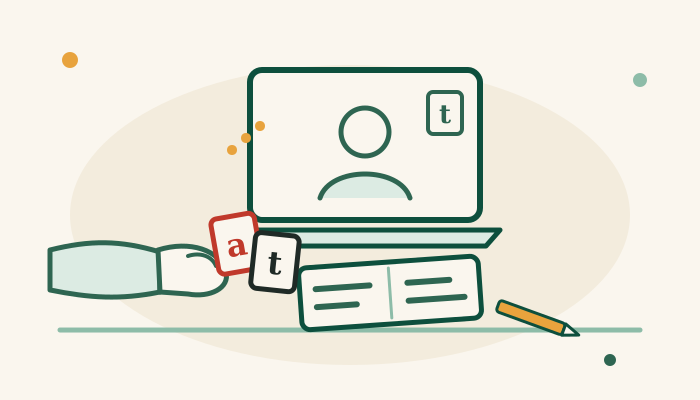
A parent in the room during an online dyslexia intervention session helps most by handling the things the teacher cannot reach through the screen: the letter cards, the camera, the charger, and the noise in the house. The one thing the parent should not do is answer for the child. The child’s pause is where the learning happens.
Why is a parent in the room at all?
A parent is in the room because a young child cannot run an online session alone. In my sessions, most children under about eight have an adult nearby, and I ask for that in the first weeks, as I explain in what happens in online dyslexia intervention. The teacher is on a screen. Someone in the house has to find the right card, turn the notebook to the camera, and notice that the tablet is about to die.
This is not a Flourishing Kids invention. Speech and language therapists who work online call that person a facilitator, and the American Speech-Language-Hearing Association describes facilitators as people who support the client at the client’s site while the clinician works remotely, with family members among those who can take the role. A 2021 study of school-based tele-facilitators by Douglass and colleagues found that the role covers the technology, the physical materials and the child’s behaviour, as directed by the clinician, and that the few facilitators who answered had picked the job up by watching and asking, with no formal training. The parents I work with are doing this job already, most of them well, and nobody has told them what the job is.
What should the parent do before the session starts?
Before the session the parent sets the room up so that the child can start on the sound drill in the first minute. The children I teach who settle fastest come from houses where the same few things are ready every time.
- The letter cards are cut, sorted and within reach. I send families a printable set with the vowels in red and the consonants in black. Kept in a tray with the vowels on one side, they let the child pick the two cards I ask for, not a handful.
- The notebook is open to a fresh page with the pencil and eraser beside it. If I have asked for two columns for a sorting task, the parent draws the lines before we start, not while the child waits.
- The device is charged and on a stand or a stack of books, so the camera shows the child’s face and the notebook when it is held up. In my sessions a charger brought in halfway through costs more attention than you would expect.
- The meeting link is the same one every week, saved somewhere the parent can tap without searching. A session that starts eight minutes late is a session with no story at the end.
- The room is quiet. A television in the next room, a sibling asking for something, or an adult on a phone call within earshot all pull the children I teach off the word in front of them. A parent working silently at a desk nearby is fine; a parent on a video meeting is not. If the house is small, headphones for the child help.
One more thing before the session: tell me if the child is tired, upset or unwell. A line on WhatsApp changes how I pace the hour.
What should the parent do during the session?
During the session the parent has three jobs: hand over the materials I ask for, keep the camera useful, and keep the room calm. Everything else belongs to the child and me.
Handing over materials means exactly the cards or pages I ask for, and no more. If I ask for the “s” card and the parent also slides over the “h”, the child has been given the answer to the next question. If I ask the child to find the “ck” card, the parent waits while the child looks. The looking is practice.
Keeping the camera useful means tilting the notebook when I say I cannot see it, and not more. In my sessions I watch the pencil, not the finished word, because that is where I see a letter formed backwards before it becomes a habit. If the notebook is held up for a second and taken away, I miss it.
Keeping the room calm means being the steady presence, not the second teacher. A father I work with sits just off camera, passes the cards when the child asks, and calls time on the movement break by counting down from ten. The child hears one voice teaching. In another family the mother sits beside her child only in the last third of the hour, when the child’s attention is thin, and her hand on the chair back is enough to finish the dictation. Neither of them speaks over me, and neither tells the child to sit straight every few minutes. A child corrected on posture six times in an hour has heard six interruptions to the word they were sounding out.
Two things I ask parents not to do with a young child. Please do not make a shy child greet me on camera before they are ready; I would rather have a wave in the third week than tears in the first. And please do not point at the screen for them. In a spot-the-difference task I cannot see where a finger lands, so the child has to tell me in words, and the words are the point.
Why should the parent not answer for the child?
The parent should not answer for the child because the pause before an answer is where a child with dyslexia does the work that the session is for. When I ask a child to read “melting” and the child says “melt”, the parent at the side can see the ending and wants to say it. I ask them to wait. The child reads the word again, finds the ending, and more often than not looks for the ending the next time a word has one. If the parent had said it, the child would have learned that waiting long enough brings the answer from somewhere else.
Three seconds of silence after a question feels like a long time to a parent. To a child with dyslexia it is the time it takes to blend the sounds instead of guessing the word.
There is evidence for the pause itself. Mary Budd Rowe’s research on wait time in classrooms, published in the Journal of Teacher Education in 1986, found that teachers typically wait about a second after a question, and that waiting three seconds or more produced longer and more reasoned answers from students and changed what teachers expected of them. I have not measured my sessions against her stopwatch, but her finding matches what I see when a parent sits on their hands: the child’s second attempt is usually the right one. “Blend, don’t guess” is one of the first things I teach a child, and it only works if the adults around the child let the blending take as long as it takes.
The same applies to a wrong spelling. When I say a word and the child spells it aloud with a mistake, I write down exactly the letters the child gives me and ask the child to read them back. A child who spelled “shoping” and reads it back as “shop-ing” hears the problem without anyone saying it. A parent who sees the error and says “double the p” has taken that moment away. The dictation in what happens in online dyslexia intervention works the same way: a question, never the answer.
What can the parent do that speeds the learning up?
A parent in the room speeds the learning up most by giving one clue, not the answer, and only when I ask. One mother has learned to send her child back to the key sentence when a vowel sound is stuck, and to say nothing more. The key-sentence tool is a memorised sentence for each vowel sound that holds all of that sound’s spellings; her clue sends the child to a tool the child already owns, which is a different thing from supplying the sound.
What the parent does after the session matters as much. Ten minutes of dictation at home on the pattern we practised, with the parent saying the word, writing down the letters the child gives and having the child read them back, is the most useful piece of home practice I know. We agree the pattern at the end of each session and review the home practice on the monthly parent progress call, which I describe in what a monthly parent progress call covers.
Who should not be in the room?
The parent of an older child should not be in the room. From about nine, in my sessions the hour works better when it belongs to the child, and the parent gets the full picture on the monthly call instead. Some older children ask for a parent nearby in the first week; I let them, and we agree a week when the parent steps out.
A parent who cannot stay quiet should also step out, and I say this without blame; the pull to help is strong. If you find yourself mouthing the answer or sighing at the third wrong attempt, the child feels it, and the children I have watched feel judged stop trying in front of the parent. In that case the better job is the one outside the door: the charged device, the sorted cards, the quiet house, and the ten minutes of dictation later. The same goes for a younger sibling who answers first or wants the cards, unless the house gives you no choice.
For general online schooling, where the class is large and the teacher cannot see your child’s notebook, the advice is different and I have written it up separately in ways to support your child during online classes.
Frequently asked questions
What if my child looks at me for the answer?
Look back warmly and say nothing. The child is checking whether help is coming. In my sessions it usually takes a session or two before the eyes stay on the screen. If I see it happening, I will say “ask me, not Amma” or “ask me, not Dad”, and the child learns where the help lives.
I do not speak much English. Can I still help?
Yes, and in some ways more easily, because you will not be tempted to supply the word. Your jobs are the set-up, the cards and the quiet. If I need something explained in your home language, I will ask you to translate, and that is the one time your voice belongs in the session.
How do we start?
Every family at Flourishing Kids begins with the Reading & Spelling Snapshot, an informal reading and spelling assessment done online with the parent present. Assessment fee: USD 150. You will see in that first hour how I ask a parent to help, and the follow-up conversation covers what the sessions would look like for your child.
Dr. V.S. Gayathri is a Dyslexia Therapist, an Orton-Gillingham trained literacy specialist, and the founder of Flourishing Kids. She has delivered over 4,000 hours of one-to-one reading and spelling intervention, helping children across multiple countries build stronger literacy skills. If you are wondering how to be useful in the room without taking over, get in touch for a free 15-minute conversation.